
The Phone Turned into a Weapon: How Criminals Take Over Accounts and Drain Funds
Messages impersonating banks, fake links, and calls impersonating familiar entities – cybercriminals don't have to hack into a computer to reach money. Sometimes all they need is to get the victim to hand over the key themselves
- Updated
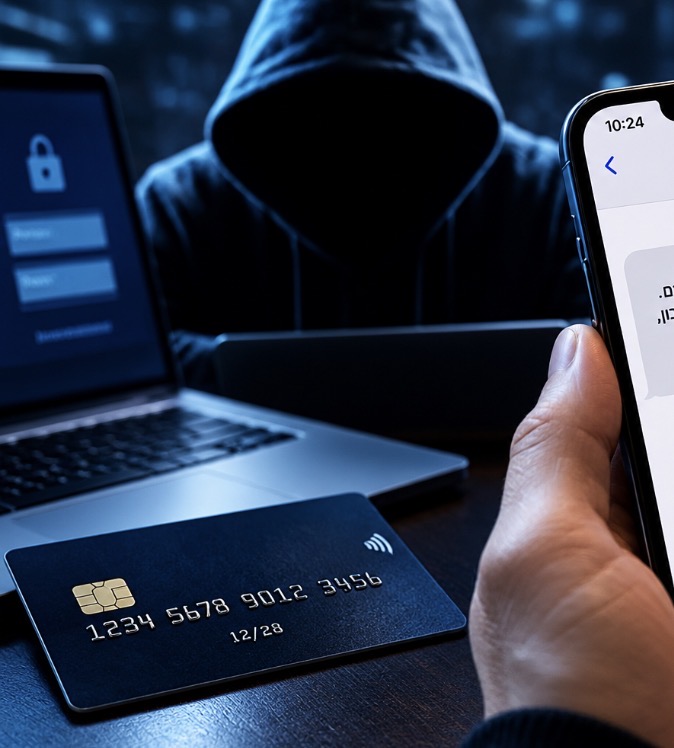
One of the most common methods begins with a seemingly innocent message. The victim receives an SMS, WhatsApp message, or email that appears to come from a familiar entity. Sometimes the message warns of unusual account activity or demands immediate verification of details.
The goal is to create pressure and cause the user to act quickly. A link attached to the message may lead to a page mimicking a real website, where the victim is asked to enter login credentials or personal information.
You Don't Always Need to Hack the System
The worrying part of this method is that attackers are often not required to breach the secure systems of the bank or company directly. Instead, they try to convince users to hand over their password, verification code, or other information granting access to the account themselves.
In other cases, a phone call is used. The caller presents themselves as a representative of a bank, credit card company, or other service provider, attempting to convince the victim that urgent action is required to supposedly prevent theft or an account freeze.
A Few Minutes Can Be Enough
From the moment criminals gain access to the account, they may attempt to act quickly before the victim realizes something is wrong and manages to contact the bank or freeze the account.
This is precisely why messages that apply pressure and demand immediate action should raise suspicion.
Receiving a message is not proof that the sender is truly the entity displayed on the screen. The safer approach is to avoid clicking on the received link and instead contact the relevant entity through the official app, a website familiar to the user, or a verified phone number.
Digital crime may take place behind screens, but the damage it can cause – financial, personal, and sometimes legal – is entirely real.